


Terry Kawaja is famous for his LUMAscapes which capture various categories in advertising and media through the lens of M&A. These handy visuals have become reference guides for marketers and investors alike.
I remember when the very first LUMAscape came out in 2010. I had just taken the CEO role at MediaBank (we’ll come back to that shortly) and Terry presented it at the IAB. Everyone was amazed by how many different buckets there were between advertisers on the left and publishers/audiences on the right. There were 20-ish different categories of companies playing middlemen roles with each pinching a few pennies off the CPM—what we now call the ad tech tax.
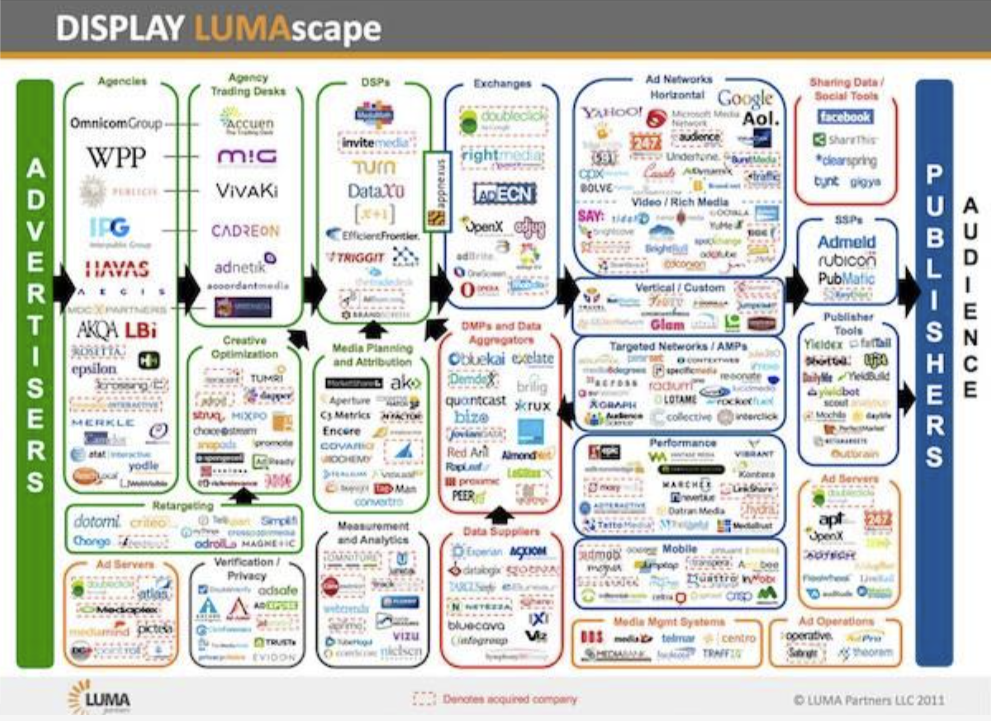
Now, of course, Terry’s goal was to show that the ecosystem was too fragmented and consolidation was inevitable and that’s where LUMA comes in to help with strategic acquisitions. (All the logos with dotted lines denote acquired companies.) I remember looking at it and seeing incredible opportunity for an independent advertising software company to emerge at scale, converge the supply chain, and provide an alternative to big tech walled garden solutions.
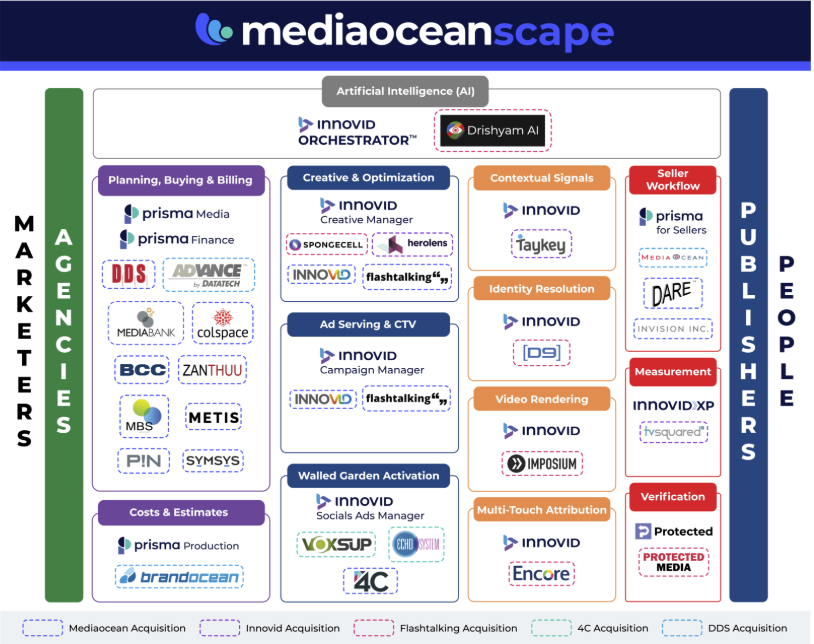
Fast forward a year and I got the chance to run that playbook. Here’s where we stand a couple decades years later. I present to you the MEDIAOCEANscape. Let’s unpack it.
Click to view full size (desktop only)
Mediaocean was formed by the 2013 merger of MediaBank and Donovan Data Systems (DDS), which had been in business since 1967. We were able to keep the Mediaocean trademark from a sell-side platform that DDS had acquired years prior. Check out the original logo—pretty wild!
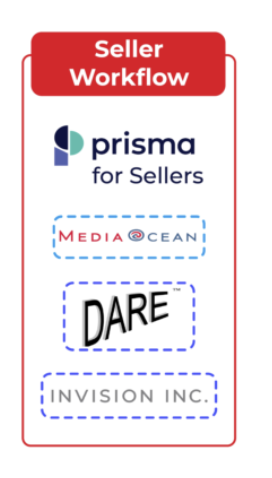
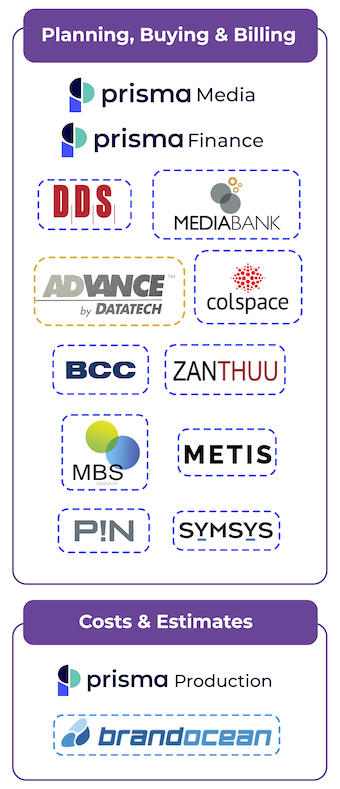
In 2015 we sold Mediaocean to Vista Equity Partners and embarked on an acquisition spree, focusing on core planning, buying, and billing platforms in major countries around the world. These companies comprise what we now call Prisma Media and Prisma Finance and the idea was to make sure we could continue to innovate and offer system-of-record functionality in every geography to support global and regional advertisers alike.
In 2016, we bought Invision to bolster our sell-side offering and enable a true ecosystem play. We also have Prisma Production, formerly known as Aura, which stemmed from an early DDS acquisition of Brandocean. (We love our bodies of water here!)
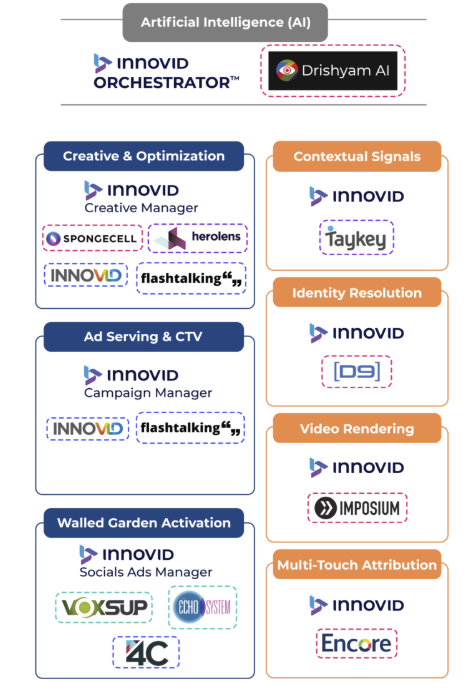
Jumping to 2020 we made a big bet and bought 4C Insights. This was the first time we expanded outside core buyer/seller workflow and into the campaign optimization process. The thesis was taking Mediaocean from just processing ad spend to actually influencing it. 4C was formed by the merger of Voxsup and The EchoSystem and is now part of Innovid as our Social Ads Manager.
In July of 2021 we moved even further upstream in the supply chain with the acquisition of Flashtalking. Now we had a buy-side ad server and tools for dynamic creative optimization. Flashtalking, for its part, had been quite acquisitive buying Spongecell for DCO, D9 for identity resolution, Imposium for video rendering, Encore for MTA, Drisyham for AI, and Protected for verification. We were able to bring all those assets together and a short time after, Vista sold Mediaocean to CVC, TA, and Charlesbank so we could embark on the next leg of our journey.
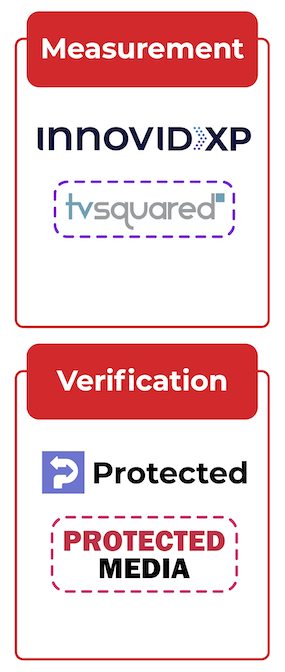
Moving to the beginning of 2025, we closed our acquisition of Innovid and merged the entity with Flashtalking. This brought together 2 leading independent ad servers as a bigger competitor to Google. The deal also brought along incredible assets that Innovid had acquired including TV Squared (cross-screen measurement) as well as Taykey (contextual signals) and Herolens (creative optimization). We’ve combined all this functionality into the #NewInnovid and the Orchestrator is our cherry on top.
InnovidXP is now our measurement brand and Protected runs independently as a verification solution for fraud detection, brand safety, viewability, and attention, while also being integrated into the Innovid ad server.
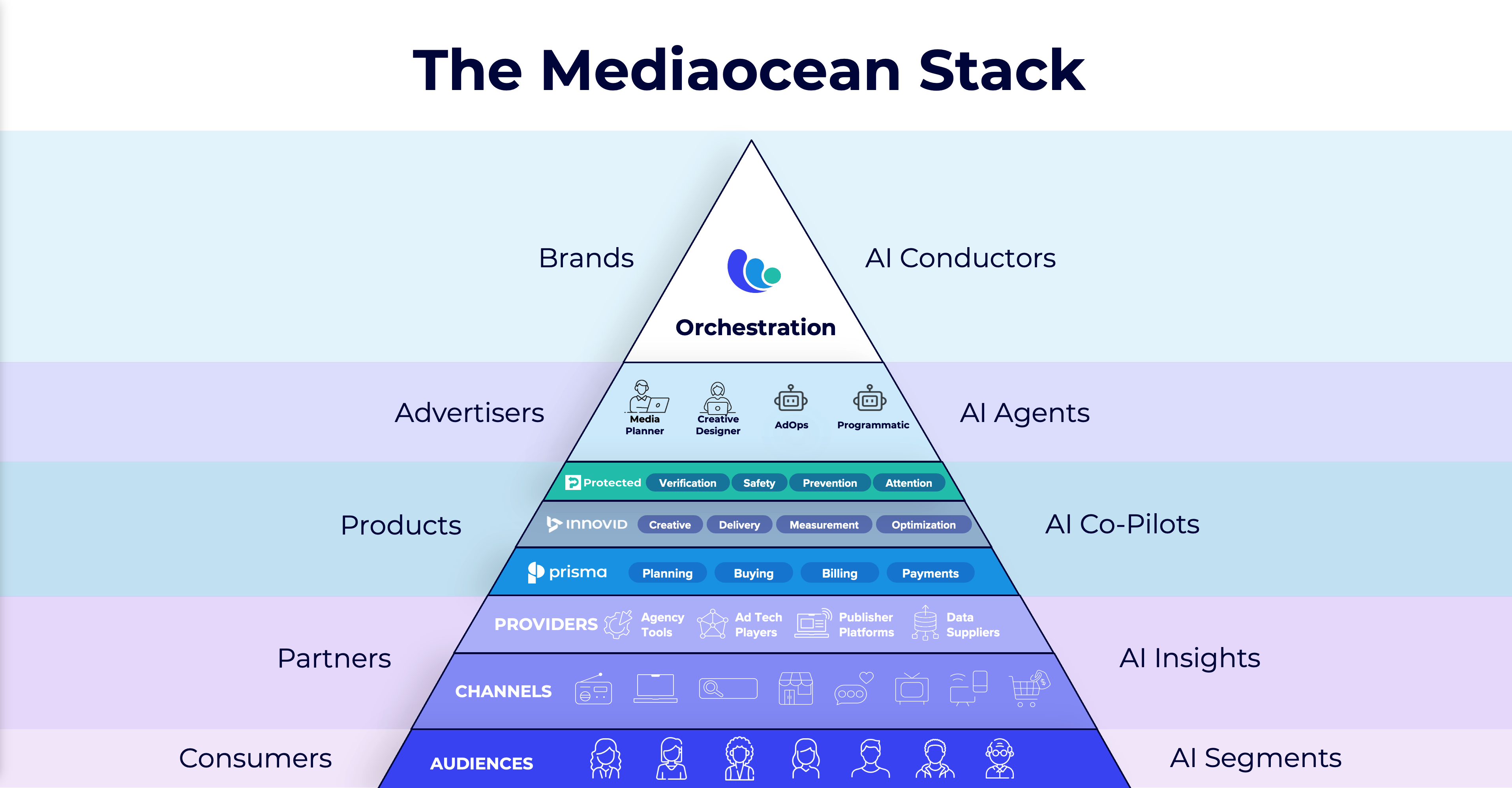
As you can see, today’s Mediaocean truly connects all the dots but, as much as I like the SCAPE construct, I prefer seeing all our vision laid out in a way that makes the value prop more intuitive. Like so:
Click to view full size (desktop only)
Starting at the bottom with consumers who form the foundation of everything we do and the outcomes we aim to drive—AI helps us create segments upon which we can build audiences deterministically, probabilistically, and synthetically.
On top of that are all the channels people consume and the signals that come from media supply and other partners like agencies, DSPs, SSPs, publisher platforms, and data providers—all these inputs help to fuel AI insights.
And then we activate on top of this with our products—Prisma for planning, buying, billing, and payments, Innovid for creative, delivery, measurement, and optimization, and Protected for verification, brand safety, fraud prevention, and attention metrics. We also have our AI co-pilots for purpose-built workflows to accelerate performance within and across the various products.
From there, you have advertisers (our customers) sitting on top and setting goals and guidelines that AI agents can execute against with humans in the loop. And it’s all in service of the brand and controlled by an AI orchestration superagent that conducts this symphony and brings the industry together in harmony.
They say a picture’s worth a thousand words but the MediaoceanSCAPE represents billions in investment and our current state company, with more than $200 billion in ad spend running through our platforms, is poised for much bigger impact.
A few things to call out that I’d say have been key to our success:
- Neutral, objective, and unbiased. Nowhere in here do we take positions in media inventory. No principal ownership. No arbitrage. Nothing. We have no incentive to move media to any specific partner or placement. We just do what’s best for our customers.
- Full stack AND best-of-breed. Very early on we realized that marketers and their agency partners wanted end-to-end full stack systems AND best-of-breed point solutions. They were not willing to compromise on a full stack that was so-so with specific functionality even if it was cheaper to buy the whole vs. sum of parts. But, at the same time, they didn’t want to suffer through the integration and reconciliation hurdles of having 10+ partners in a frankenstack. So we had to offer both.
- Build/Buy/Partner: Buying companies is not the only way we’ve grown. We take a build/buy/partner strategy. Every year a majority of our OpEx goes to R&D and engineering so we can build more innovation for customers. And we have hundreds of partners who rely on our APIs and integrations to leverage our tools across their footprints. We aim to uplift the entire ecosystem as high tides truly lift all boats in the (Media)ocean!
- It’s all about people! The success of any acquisition always comes down to 1 thing—the people. When we buy companies we go to great lengths to preserve the best parts of their individual culture while blending the best aspects of our corporate culture. Underneath each logo you see here are incredible people who put blood, sweat, and tears into building amazing companies and it’s an honor to bring them into our domain.
Looking back and ahead, I’m proud to say that the MEDIAOCEANscape delivers value to the entire advertising industry by eliminating friction, reducing fees, and improving results as we keep our eye on the ultimate goal, which has been the same since Terry’s original LUMAscape—connecting advertisers and audiences for mutual benefit.